Picture this: you’ve babied your tomato plants all season, dreaming of that first juicy bite of summer perfection. But there they sit: green, stubborn, and seemingly mocking your gardening dreams. Sound familiar?
Here’s the shocking truth: over 70% of home gardeners unknowingly sabotage their own tomato harvest with these critical mistakes. The game-changer? Most of these errors are so simple to fix, you’ll wonder why nobody told you sooner.
Your tomatoes aren’t difficult. They’re trying to tell you something important. Let’s decode their green message and transform your garden into the red-gold paradise you crave.

1. Planting in the Wrong Location
Think of tomatoes like solar panels. They’re sunlight addicts that need their daily fix to function.
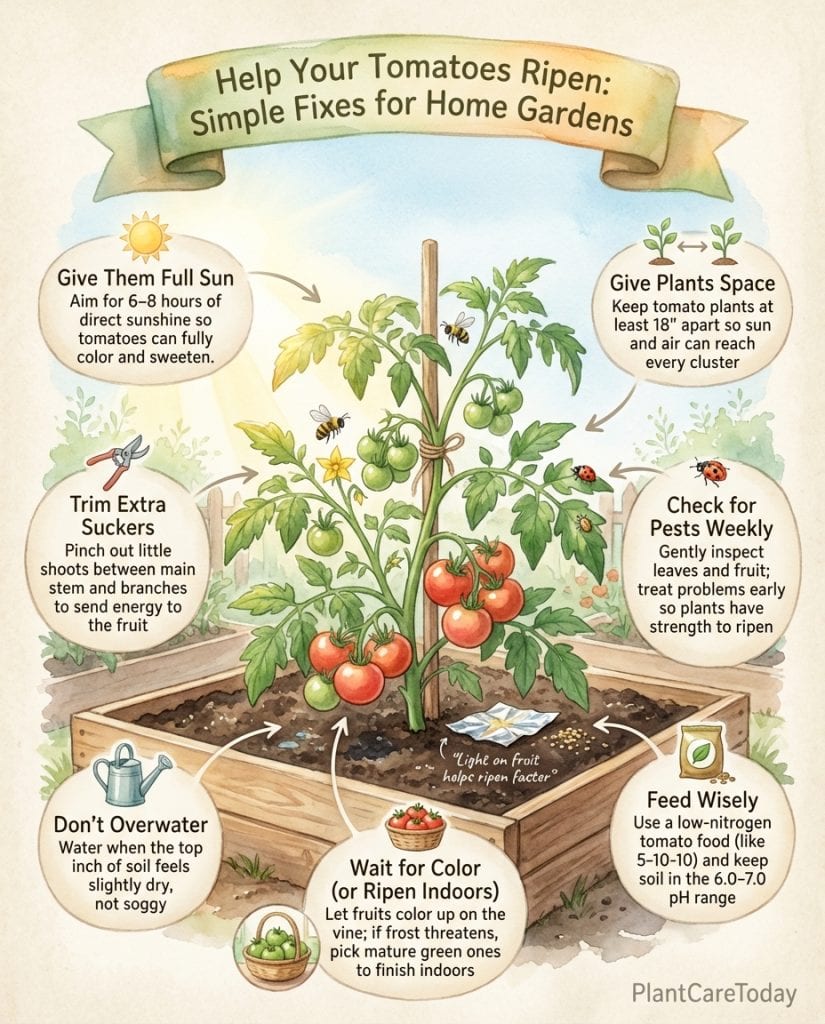
Most folks don’t realize they are doing this, but planting tomatoes in anything less than 6-8 hours of direct sunlight is like asking a marathon runner to perform in flip-flops.
That “partially sunny” spot near your fence? It’s sabotaging your harvest. Tomatoes need that blazing sunshine to create the sugars that trigger ripening. Without it, they’ll stay green longer than a traffic light in rush hour.
The secret most plant experts won’t tell you: even dappled shade can delay ripening by 2-3 weeks. Your tomatoes aren’t lazy. They’re starving for light.
2. Overwatering the Plants
I was shocked to discover that more tomatoes die from kindness than neglect. Overwatering is like forcing your tomatoes to drink through a fire hose. They’ll drown in your good intentions.
Here’s the revelation: tomatoes prefer to be slightly thirsty rather than constantly wet. Waterlogged roots can’t absorb nutrients properly, leading to that dreaded blossom end rot that turns your beautiful fruit into unsalvageable mush.
The miracle technique? Stick your finger 1-2 inches into the soil. If it’s dry, water deeply. If it’s moist, walk away. Your tomatoes will thank you with spectacular ripening.

3. Lack of Proper Pruning
Forget what you’ve heard about letting tomatoes grow wild. This is where amateur gardeners separate from the pros. Those innocent-looking suckers (shoots between main stems and branches) are energy vampires stealing power from your fruit.
Think of your tomato plant like a busy parent. Every sucker is another demanding child competing for attention. Remove them, and suddenly your plant can focus all its energy on ripening the fruit you want.
The game-changer for your tomatoes isn’t fertilizer. Strategic pruning transforms struggling plants into vibrant producers.
4. Inadequate Sunlight Exposure
Even sun-loving tomatoes can suffer from selective shade when the plant gets sun, but the fruit stays hidden. It’s like having a solar calculator with the panel covered.
Most people make this mistake with their tomatoes: they focus on the plant getting sun but ignore whether the actual fruit is basking in those rays. Your tomatoes need direct sunlight on their skin to develop that lush, red color.
Pro hack: Use aluminum foil or white mulch as light reflectors around your plants. This simple trick can speed up ripening up to 40% by bouncing extra light onto the lower fruit.
5. Poor Soil Quality
Your soil is either your tomato’s best friend or its worst enemy. There’s no middle ground. Tomatoes are like high-performance athletes; they need premium fuel to deliver spectacular results.

The difference between amateur and pro plant parents is simply this: pros test their soil. pH levels between 6.0 and 7.0 and rich potassium content are non-negotiable for proper ripening.
Here’s what surprised me: even gorgeous, green plants can produce disappointing fruit if the soil lacks key nutrients. Your tomatoes might look healthy, but be secretly malnourished.
6. Incorrect Fertilization Practices
This mistake will shock every gardener: over-fertilizing with nitrogen creates beautiful, lush plants that refuse to ripen fruit. It’s like feeding your tomatoes nothing but leafy greens. They’ll grow gorgeous foliage, but skip the main course.
The secret ratio that transforms your harvest? Look for fertilizers with lower nitrogen and higher phosphorus and potassium, like a 5-10-10 blend. Think of it as switching from junk food to a balanced diet.
Stop fertilizing 6 weeks before your first expected frost. Late-season feeding is like giving your tomatoes an energy drink at bedtime. It keeps them too busy growing leaves to focus on ripening.
7. Ignoring Pest and Disease Control
Pests are like tiny tomato thieves, stealing plants’ energy for ripening. One tomato hornworm can devastate a plant overnight, consuming the energy of 30 cherry tomatoes.
Your tomatoes are trying to tell you something important when the leaves turn yellow or the fruit develops spots. They’re under attack and need rescue. Disease-stressed plants can’t spare energy for ripening.
The breakthrough approach? Weekly plant inspections catch problems before they become disasters. Five minutes of prevention beats five weeks of struggling with diseased plants.
8. Planting Too Close Together
Crowded tomatoes are like people packed in an elevator: stressed, competing for resources, and unable to perform their best. Proper spacing isn’t just about looks; it’s about survival.
Plants spaced less than 18 inches apart create their own shade, block airflow, and share diseases faster than gossip. It’s like forcing your tomatoes to live in a cramped apartment when they need a suburban yard.
The dramatic difference proper spacing makes will astound you. Suddenly, your plants can breathe, dry quickly after rain, and ripen fruit evenly throughout the plant.
9. Harvesting Too Early
Patience isn’t just a virtue with tomatoes. It’s the difference between mediocre and mind-blowing flavor. Harvesting too early is like leaving a movie during the climax.

Here’s what most gardeners don’t know: tomatoes continue developing sugars and nutrients right up until full ripeness. That “almost red” tomato still has days of improvement ahead.
The trick that saves your harvest when frost threatens? Pick mature green tomatoes and ripen them indoors at room temperature. They’ll finish the process off the vine, but only if they’ve reached maturity first.
10. Not Supporting the Plants Properly
Unsupported tomato plants are like marathon runners without proper shoes. They’ll struggle to reach the finish line. Broken branches mean broken dreams of ripe tomatoes.
The weight of ripening fruit can snap branches faster than expected, especially after rain, when everything is heavier. Support isn’t optional. It’s insurance for your investment.
Cages, stakes, or trellises keep fruit off the ground and exposed to sunlight. Ground-contact tomatoes ripen unevenly and attract pests like an all-you-can-eat buffet sign.
11. Using Viral Hacks Without Research
Social media gardening hacks are like diet fads—they promise miraculous results but often deliver spectacular failures. That viral baking soda trick? It can harm your soil chemistry.
Most folks don’t realize they are doing this, but following unproven advice sabotages their gardens. Epsom salt, banana peels, and other “miracle” solutions rarely have scientific backing.

What is the difference between thriving and struggling gardens? Successful gardeners stick to proven methods from trusted sources like university extensions, not random social media posts.
Your tomatoes deserve better than experiments. They deserve techniques that work. Choose boring, proven methods over exciting, untested hacks when in doubt.