Are you frustrated with seedlings that struggle after transplanting?
You’re not alone. Many gardeners invest weeks of care in starting seeds indoors, only to see their plants wilt, stunt, or die after transplanting them to the garden.
The good news? Most transplant failures stem from a few common mistakes that are easy to fix.
Here’s how to ensure your transplants don’t just survive, but thrive and grow rapidly.

1. You’re Rushing the Season
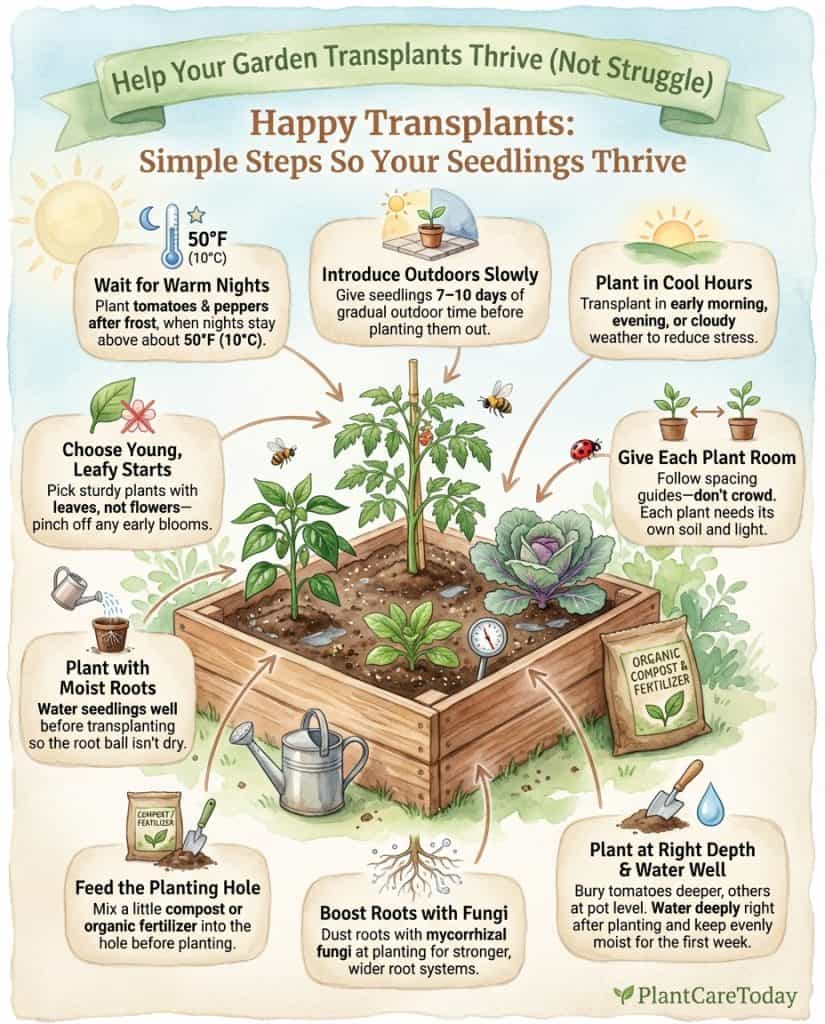
Patience is crucial when transplanting, especially with heat-loving vegetables like tomatoes, peppers, and cucumbers.
That first warm spring day is tempting, but premature planting can expose tender seedlings to late frosts.
The Fix: Wait until after your last frost date to transplant warm-season crops.
For extra protection, consider waiting 2-3 weeks after the frost date for tomatoes (when nighttime temperatures consistently remain above 50°F) and 3-4 weeks for sensitive plants such as cucumbers.
Remember: plants transplanted at the right time will quickly outgrow those planted too early and damaged by cold.
2. You’re Skipping the Hardening Off Process
Seedlings grown indoors or in a greenhouse have never experienced wind, direct sunlight, or temperature fluctuations.
Throwing them directly into the garden is like sending someone from a climate-controlled office straight to the desert.
The Fix: Gradually acclimate your plants to outdoor conditions over 7-10 days:
- Day 1: Place plants in a shaded, wind-protected spot for just 1 hour
- Day 2-3: Increase outdoor time to 2-3 hours with slightly more light
- Day 4-6: Leave plants out for half the day
- Day 7-10: Expose plants to full conditions, including overnight stays

Use shade cloth or insect netting to create a transition environment that reduces stress during this process.
3. You’re Transplanting During the Wrong Time of Day
Timing matters! Transplanting during the heat of a sunny day puts enormous stress on plants before their roots can establish.
The Fix: Transplant during cloudy days, early mornings, or evenings when temperatures are cooler. Overcast days with light drizzle are ideal for transplanting.
If you must transplant during sunny conditions, use shade cloth to protect new transplants for their first few days in the garden.
4. You’re Planting Already Stressed Plants
Those young tomato or pepper plants already flowering in their pots aren’t precocious. They’re stressed! Early flowering is a survival response to being root-bound or stressed, not a sign of health.
The Fix: Look for plants still in their vegetative growth stage rather than those already producing flowers or fruit.
Healthy transplants should look robust but not yet reproductive. If you already have flowering transplants, pinch off the blooms before planting to redirect energy to root development.
5. You’re Transplanting Dry Plants
Planting seedlings with dry root balls creates immediate drought stress on top of transplant shock.
The Fix: Water your seedlings thoroughly the night before or morning of transplanting. The entire root ball should be moist (but not soggy) when it is placed in the ground.

6. You’re Ignoring Proper Spacing
Crowded plants compete for nutrients, water, and light, creating a stressful environment from day one.
The Fix: Follow spacing guidelines for each specific plant type. Consider using square-foot gardening methods to maximize space while maintaining appropriate distances.
Remember that proper spacing isn’t just about plants not touching. It’s about ensuring each plant has enough soil volume for its root system.
7. You’re Forgetting to Add Fertilizer
Transplants require readily available nutrients to support recovery and new growth.
The Fix: Mix a balanced organic fertilizer into the planting hole before transplanting. This ensures nutrients are available right where new roots will grow. For heavy feeders such as tomatoes, consider adding compost to the planting hole.
8. You’re Not Using Mycorrhizal Fungi
These beneficial fungi create symbiotic relationships with plant roots, dramatically improving nutrient uptake and reducing transplant shock.
The Fix: Apply mycorrhizal fungi (often sold as “mycos”) directly to the roots when transplanting. This simple addition can significantly improve establishment rates and early growth by extending the plant’s effective root system.

9. You’re Planting at the Wrong Depth
Different plants have different planting depth requirements; getting this wrong can lead to stem rot or unstable plants.
The Fix:
- For tomatoes: Plant deeply, burying the stem up to the first set of true leaves. Tomatoes will form additional roots along the buried stem.
- For most other vegetables (including peppers and brassicas), plant at the same depth as they were growing in their containers, or slightly deeper for stability.
10. You’re Neglecting Post-Transplant Care
The work isn’t done once plants are in the ground—the first week is critical for establishment.
The Fix: Water thoroughly immediately after transplanting to eliminate air pockets around roots. Continue watering consistently for the first week or two, until plants show signs of new growth.
Label everything clearly with permanent markers so you can track varieties that perform well in your garden.

Conclusion
Successful transplanting is more about patience and attention to detail than gardening skill. By avoiding these common mistakes, you’ll see dramatically better results from your transplants and ultimately enjoy bigger harvests with less frustration.
The most valuable advice for new gardeners? Keep a garden journal that tracks planting dates, varieties, and results.
Over time, you’ll develop personalized timing that works perfectly for your specific growing conditions. Your future self will thank you for this invaluable reference.