I was shocked to discover that 95% of orchid owners unknowingly sabotage their plants’ bloom ability. These stunning beauties sit there, green and healthy-looking, but stubbornly refusing to produce those spectacular flowers we all crave.
The secret most plant experts won’t tell you is this: orchids are like high-maintenance divas with particular needs. Unlike your forgiving pothos or snake plant, orchids will throw a silent tantrum if even one thing is off.
They’ll look fine on the surface, but deep down, they’re plotting their revenge by withholding those gorgeous blooms.
After years of watching frustrated orchid parents struggle with this exact problem, I’ve identified the 10 critical mistakes that are keeping your orchids from flowering. Trust me, you’re probably making at least three of these right now.

1. Drowning Your Orchid in “Love” (Overwatering)
Here’s the game-changer most people don’t understand: Orchids aren’t houseplants. They’re epiphytes. Air plants that naturally cling to trees in the wild, drinking moisture from humid air and rain.
When you water them like a regular houseplant, you’re essentially drowning them. Those thick, silvery roots turn black and mushy, and a plant with rotting roots can’t possibly gather the energy to bloom. It’s like trying to run a marathon while holding your breath.
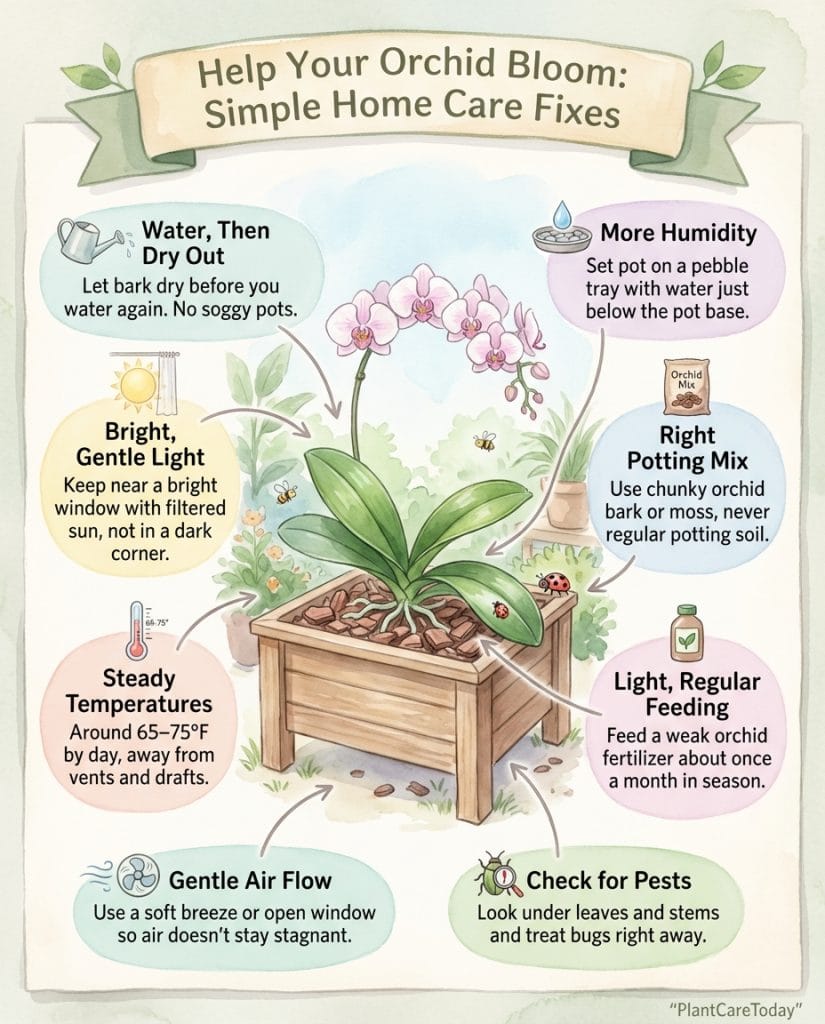
The fix? Let the potting medium dry completely between waterings. Stick your finger deep into the bark. If it’s still moist, wait a few more days.

2. Starving Them of Light (The Vampire Treatment)
Your orchid isn’t a vampire, but you might be treating it like one. Most orchids need bright, indirect light – think of the dappled sunlight filtering through a forest canopy.
That dim corner of your living room? It’s an orchid prison. Without adequate light, your plant goes into survival mode, conserving energy for basic functions instead of putting on a flower show.
Move your orchid near an east or south-facing window with sheer curtains, or invest in a grow light. Your orchid will thank you with blooms.
3. Creating a Temperature Rollercoaster
Orchids are like Goldilocks. They want everything just right. Most thrive in temperatures between 65-75°F during the day and slightly cooler at night.
That spot next to your heating vent or air conditioning unit? It’s creating temperature chaos that stresses your plant. Stressed orchids shut down bloom production faster than you can say “flower power.
Find a stable spot away from drafts and temperature extremes. Your orchid needs consistency, not surprises.
4. Suffocating Them with Stagnant Air
In nature, orchids thrive on constant, gentle breezes. In your home, stagnant air becomes a breeding ground for fungal problems, making your orchid miserable.

Poor air circulation is like forcing your orchid to hold its breath. It can’t process nutrients properly or maintain healthy metabolism. Both are essential for blooming.
A small fan nearby, or simply ensuring good room ventilation, can make a significant difference in your orchid’s health and flowering potential.
5. Creating a Desert When They Need a Rainforest
Most homes have humidity levels of 30-40%, but orchids prefer 50-70%. This massive difference is often the hidden culprit behind bloom failure.
Low humidity stresses orchids and triggers their survival instincts. Why waste energy on flowers when you’re struggling just to stay alive?
Create a humidity tray with pebbles and water, group plants together, or use a humidifier. Your orchid will change from struggling to spectacular.
6. Planting Them in Flower Jail (Wrong Potting Medium)
Using regular potting soil for orchids is like trying to grow fish in a sandbox. Those chunky bark pieces aren’t just decoration. They’re life support for proper drainage and air circulation around the roots.
Dense, moisture-retentive soil suffocates orchid roots and prevents the plant from accessing the nutrients it needs for blooming. It’s a flower jail.
Invest in a proper orchid bark mix or sphagnum moss. Your orchid’s roots need to breathe to bloom.
7. Forgetting to Feed the Beast (Fertilization Neglect)
Orchids are surprisingly hungry plants, especially when you want them to bloom. Neglecting fertilization is like expecting an athlete to perform on an empty stomach.
Without adequate nutrition, orchids cannot synthesize the complex compounds required for flower production. They’ll survive, but won’t have the energy reserves to bloom.
Use a balanced orchid fertilizer monthly during the growing season. Think of it as premium fuel for premium performance.
8. Living in Denial About Repotting
That orchid has been sitting in the same pot for three years. It’s probably root-bound and nutrient-starved. Old potting medium breaks down, becomes compacted, and stops providing the drainage orchids desperately need.

Forget what you’ve heard about orchids hating to be disturbed. They actually love fresh potting medium every 1-2 years. It’s like giving them a spa treatment.
Repot when the medium looks broken down or when roots are overflowing the pot. Your orchid will reward you with vigorous new growth and blooms.
9. Ignoring the Tiny Terrorists (Pest Problems)
Scale insects, mealybugs, and spider mites are like tiny vampires sucking the life force from your orchid. A plant fighting for survival against pests can’t spare energy for flowering.
Regular inspection is crucial. Look for sticky honeydew, white cotton-like masses, or tiny webs. These are red flags that your orchid is under attack.
Address pest issues immediately with appropriate treatments. A healthy orchid is a blooming orchid.
10. Playing Musical Chairs with Your Orchid
Your orchid isn’t a piece of furniture to be moved around for aesthetics. Constant environmental changes stress these sensitive plants and trigger their “survival mode” response.
Every time you move your orchid, it must adjust to new light levels, air circulation, and microclimate conditions. This stress directly impacts its ability to bloom.
Find the perfect spot and leave it there. Consistency is the key to orchid happiness and flowering success.
The Transformation Secret
Here’s what most people don’t realize: fixing these mistakes doesn’t just improve your orchid’s health. It can trigger a spectacular transformation. I’ve seen orchids go from years of non-blooming to producing multiple flower spikes within months of proper care.

The difference between amateur and pro orchid parents is simply understanding these fundamentals and staying consistent with care. Your orchid is trying to tell you something important through its lack of blooms – it’s time to listen.
Stop treating your orchid like a regular houseplant and start treating it like the exotic beauty it is. With these corrections, you’ll be amazed at how quickly your orchid transforms from a green disappointment into a blooming miracle.