Want to grow better onions? Here’s what actually works.
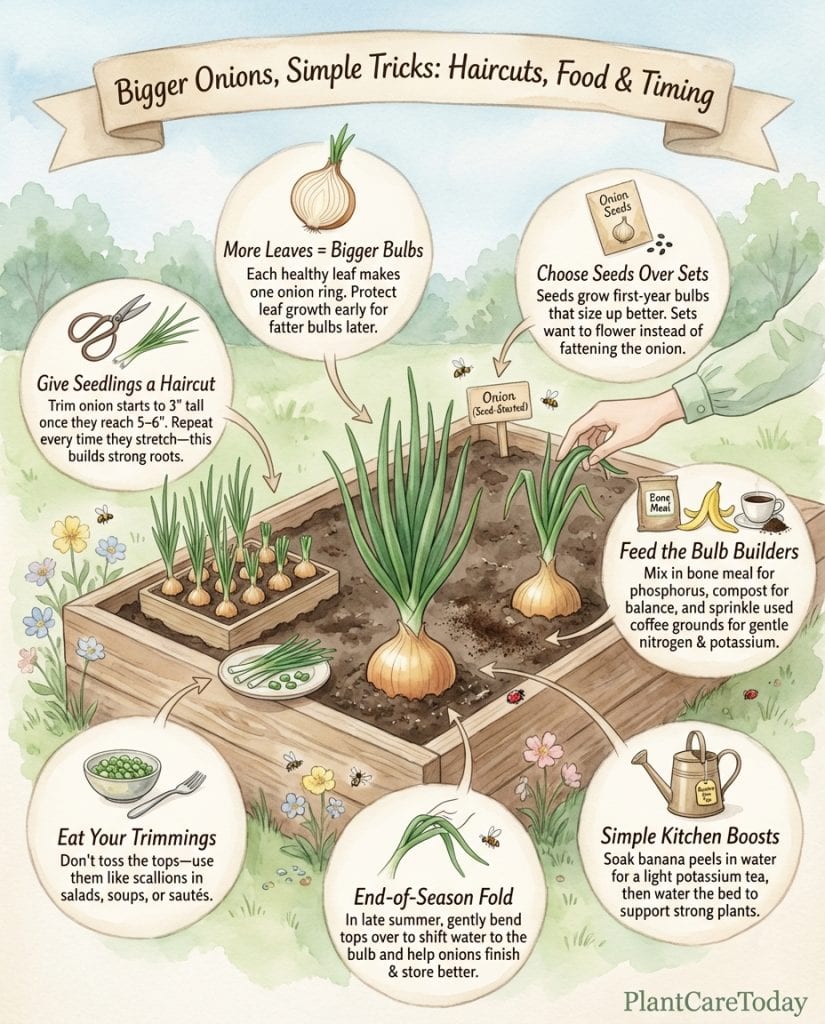
Growing bigger, better onions doesn’t mean babying them. It actually means giving them a haircut. I was surprised to learn that this simple technique, called “topping,” is one of the best ways to improve your onion harvest.
Here’s what I’ve learned about growing onions that actually turn out well.
Why Your Onions Might Not Be Doing Well
Most people plant onions and forget about them. But what’s happening under the soil really matters for how they turn out.
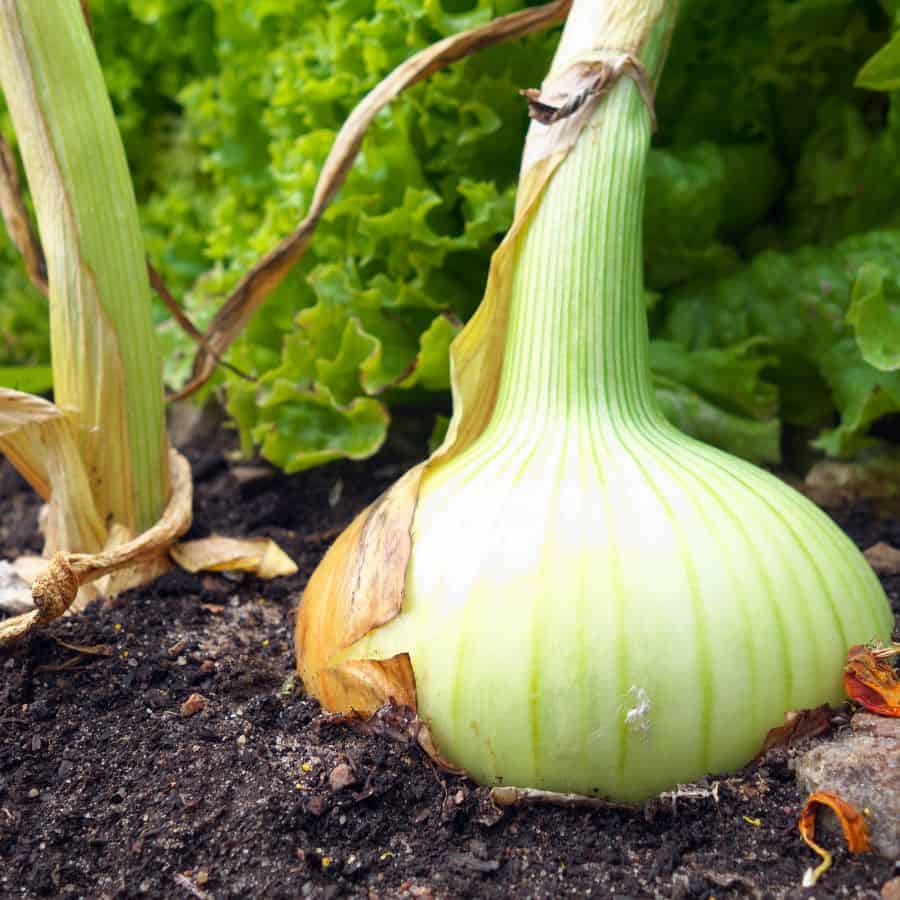
Onions grow in three stages: roots first, then leaves, and finally the bulbs. Here’s something interesting: the number of leaves your onion grows directly affects the number of rings in your harvested bulb.
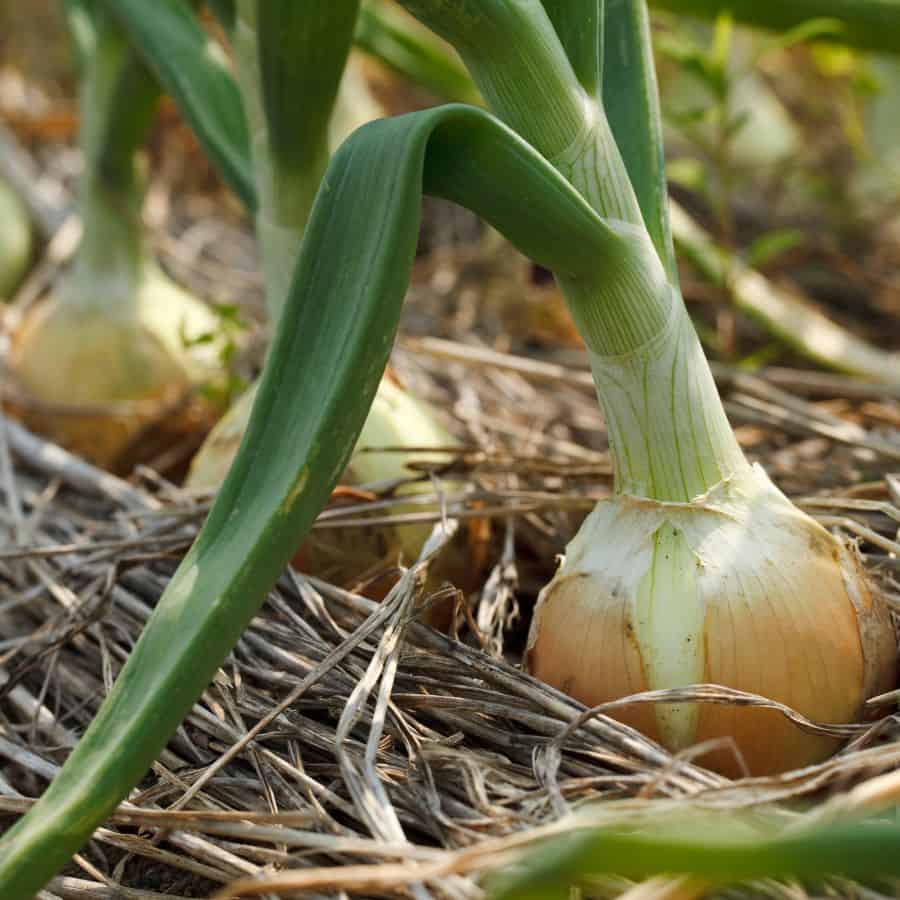
Each leaf creates one layer in your onion. So if you want bigger bulbs, you need healthy leaf growth.
Many home gardeners never fertilize their onions specifically for bulb growth. That alone can really cut down your harvest.
The Haircut Technique That Helps Onion Growth
Topping onions means trimming the tops of your seedlings to help them develop stronger roots. It sounds odd, but it works.
Here’s how to do it:
• Start when seedlings reach 5-6 inches tall
• Use scissors to trim, leaving about 3 inches of stem
• You can repeat this up to seven times before final planting
• Each trim makes the plant focus on building stronger roots
The best part? Don’t toss those trimmings. They taste great sautéed or fresh in salads—basically free scallions every time you trim.
Seeds vs. Sets: What Makes a Difference for Bulb Size
Those convenient onion sets from the garden center are already in their second year of life. They’re trying to flower, which means less energy goes into making the bulbs you want.
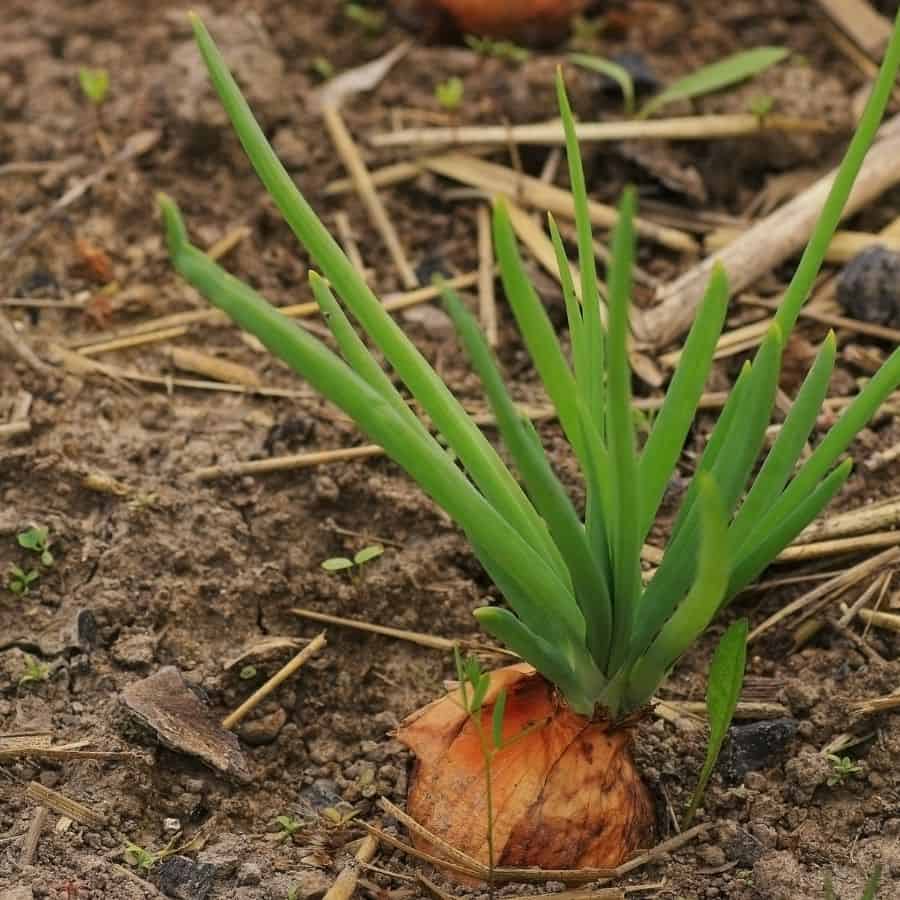
Starting from seed takes more work, but the payoff is real. Seed-started onions follow their natural first-year growth cycle. They put all their energy into creating a good bulb instead of rushing to reproduce.
The 13-Leaf Theory
Some gardeners swear by restricting onions to exactly 13 leaves. The idea is that it creates a perfect 13-ringed onion, with each ring receiving the right amount of resources.
Does it work? For competitive growers, maybe. For most of us who want tasty onions, I haven’t found that this makes much difference in actual bulb size. But if you enjoy that level of precision, give it a try.
What to Feed Your Onions for Better Size
The difference between new and experienced gardeners often comes down to knowing what to feed plants and when. Onions need specific nutrients:
• Phosphorus: Helps build bigger bulbs through cell division
• Potassium: Strengthens the plant and improves water uptake
• Nitrogen: Important in spring for developing healthy leaves (more leaves = more rings)
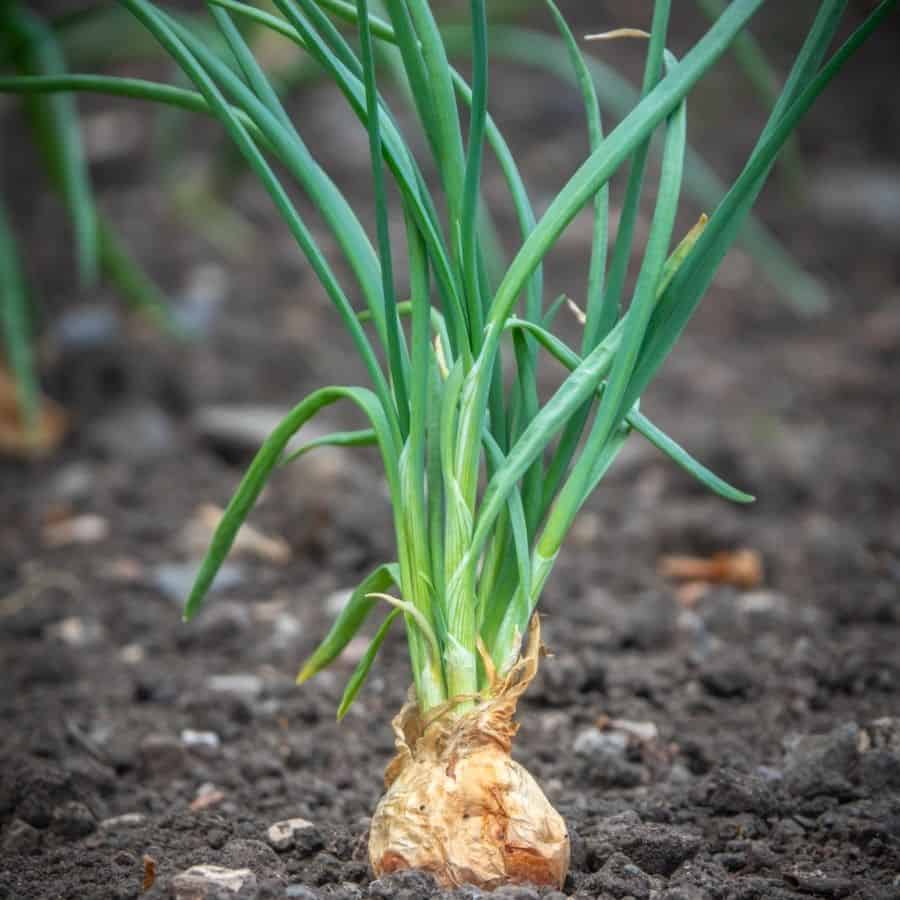
Coffee grounds provide nitrogen and potassium while adding a slight acidity that onions like. Just sprinkle used grounds around your plants.
Other good options include:
• Banana peels (soak in water for potassium tea)
• Bone meal (good phosphorus source)
• Mushroom compost (balanced nutrition)
The Late-Season Fold Technique
Here’s one more trick for the final growth stage. Gently folding over onion tops in late summer limits upward water flow and pushes more moisture into the bulb.
This speeds up the final sizing and creates onions that store longer. While it won’t make bulbs bigger than your plant’s natural potential, it helps them reach maximum size faster.
Getting Started This Season
Onions respond well to these techniques. They’re not really a “plant and forget” crop.
Start with the topping technique this season and add some targeted fertilizing. You should see a real improvement in how your onions turn out. Your kitchen will benefit from the bigger harvest.