Here’s a shocking fact that will change how you think about your backyard: one single tree can supply your kitchen with gourmet flavor for decades while requiring almost zero maintenance.
I’m talking about the bay tree, and if you don’t have one yet, you’re missing out on gardening’s best-kept secret.
Most people think bay leaves come from some exotic spice farm halfway around the world. The truth? You can grow this culinary goldmine right outside your back door, and it’s easier than you think.

The Mediterranean Marvel in Your Backyard
The bay tree (Laurus nobilis) is like having a personal chef that never asks for a raise. This evergreen beauty from the Mediterranean doesn’t just look stunning. It’s working 24/7 to supply your kitchen with liquid gold in leaf form.
Think of it as the Swiss Army knife of the plant world. While other plants just sit there looking pretty, your bay tree is actively making your life better every single day.
These drought-tolerant champions can reach 30 feet tall, but here’s the game-changer: you control their size completely. Want a compact kitchen garden centerpiece? Keep it pruned to 4 feet. Dreaming of a dramatic focal point? Let it soar.
Your Secret Weapon for Gourmet Cooking
Forget what you’ve heard about expensive spice collections. Bay leaves are the difference between amateur– and professional-tasting food, and most home cooks underestimate their impact.
Here’s what happens when you add fresh bay leaves to your cooking: they release compounds that don’t just add flavor. They create depth. It’s like adding a bass line to music. You might not consciously notice it, but without it, everything sounds flat.

The secret most chefs won’t tell you? Fresh bay leaves are 10 times more potent than dried ones. That jar from the grocery store? It’s basically aromatic cardboard compared to what’s growing in your backyard.
Use them in soups, stews, braises, and sauces. Just remember to fish them out before serving – nobody wants to bite into a whole leaf!
The Hidden Health Revolution
Your bay tree isn’t just transforming your cooking. It’s quietly revolutionizing your health. These glossy leaves are rich in vitamins A, C, and B6, as well as iron and manganese.
But here’s where it gets interesting: bay leaves have been used for thousands of years as natural medicine. They’re anti-inflammatory, antifungal, and antibacterial. Think of them as your kitchen’s pharmacy.
I was surprised to learn that regular bay leaf consumption can support digestive health, reduce stress, and even improve heart health. It’s like getting a health supplement that actually tastes amazing.
Growing Your Culinary Goldmine
Here’s the breakthrough moment for nervous gardeners: bay trees are nearly indestructible. They’re the plant equivalent of that friend who thrives on chaos and somehow always lands on their feet.

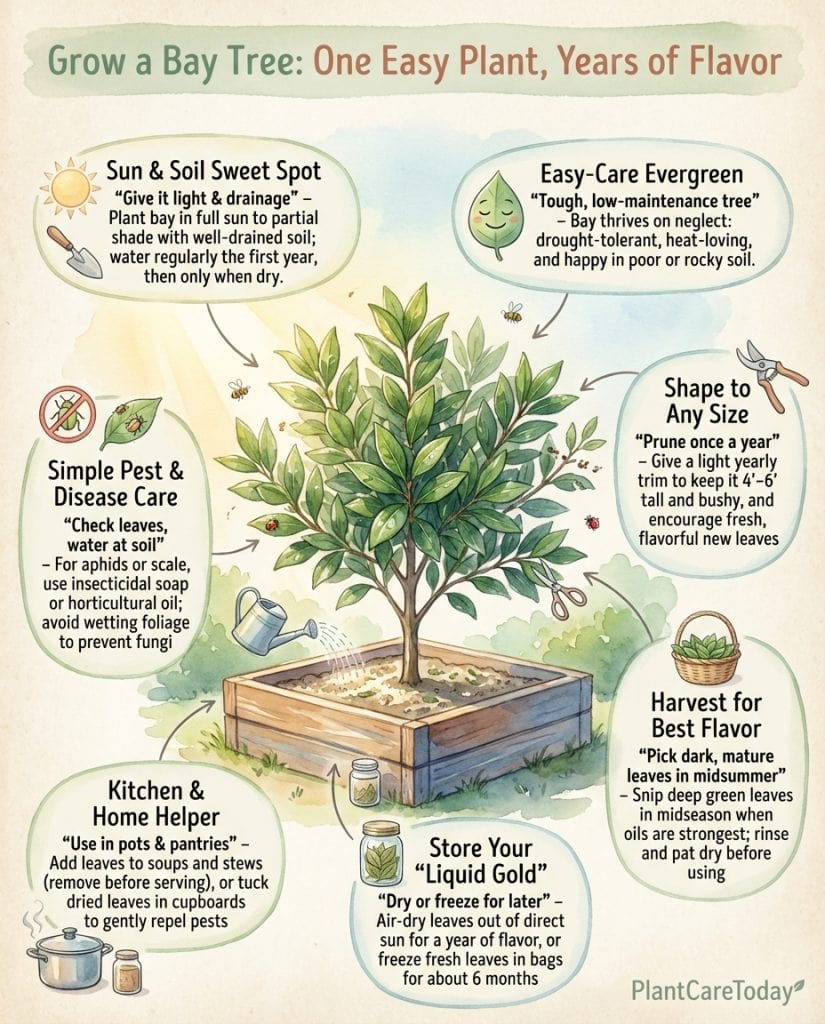
Select a sunny or partially shaded location with good drainage. Plant in spring, water regularly the first year, then basically ignore it. Seriously. These trees prefer neglect to fussing.
The miracle of bay trees is their adaptability. Rocky soil? They’ll handle it. Forgot to water for weeks? They’re fine. Extreme heat? They laugh at it.
Annual pruning helps keep them shaped and encourages new growth. Think of it as giving your tree a stylish haircut that makes it more productive.
Harvesting Your Liquid Gold
Midsummer is harvest gold rush time when essential oils peak in the leaves. Choose mature, dark green leaves. They’re your flavor powerhouses.
Use sharp scissors and be strategic. Take what you need, but leave enough foliage for continued growth. Your bay tree is ready for harvesting. It encourages healthier, more vigorous growth.
Rinse, pat dry, and you’re ready to transform your cooking game forever.
Storage Secrets That Save Money
Fresh leaves can be used immediately or preserved for year-round gourmet cooking. Properly dried bay leaves retain their potency for a full year. Try getting that shelf life from grocery store herbs!
Spread leaves on a baking sheet in a warm, dry area away from direct sunlight. Turn occasionally until they’re crispy. Store in airtight containers away from light.
Pro tip: freezing fresh leaves in sealed bags gives you six months of fresh flavor. It’s like having summer flavor available in the dead of winter.
Beyond the Kitchen: Surprising Uses
Your bay tree is the gift that keeps on giving. Those leaves are natural air fresheners – boil a few in water and watch your home smell like a Mediterranean paradise.
They’re also natural pest deterrents. Scatter leaves in pantries and storage areas to repel moths and cockroaches. It’s like having a security system that smells amazing.
Some creative gardeners use bay leaves in homemade cleaning products, leveraging their antibacterial properties. Your bay tree is literally working overtime for your household.
Troubleshooting: Keeping Your Investment Thriving
Bay trees are generally resistant to pests, but occasionally you may encounter scale insects or aphids. Don’t panic. Insecticidal soap or horticultural oil handles these issues quickly.

Fungal problems typically arise from poor air circulation or overhead watering. The fix is simple: space your plants properly and water at the base, not the leaves.
Regular inspection and good garden hygiene prevent 99% of problems. Your bay tree wants to succeed – just give it the basics.
The Investment That Pays Forever
Here’s the bottom line: planting a bay tree is like installing a gourmet kitchen upgrade that appreciates in value. While other garden investments require constant replacement, your bay tree improves with age.
You’re not just growing a plant – you’re creating a legacy. That tree will supply your family with exceptional flavor and natural health benefits for generations.
In a world of expensive organic herbs and questionable grocery store quality, your backyard bay tree is pure luxury you can actually afford. The question isn’t whether you can afford to plant one – it’s whether you can afford not to.