Here’s something that surprised me when I first learned it: a single blueberry cutting can save you $15-25 per plant, and with the average blueberry bush costing that much at nurseries, you could be looking at hundreds in savings.
The secret most gardeners don’t realize? Late summer is the golden window for propagating blueberries, not spring as everyone assumes.
I’ll be honest with you. I used to think propagation was this mysterious, complicated process only master gardeners could pull off. Boy, was I wrong.
Why Late Summer is Your Secret Weapon
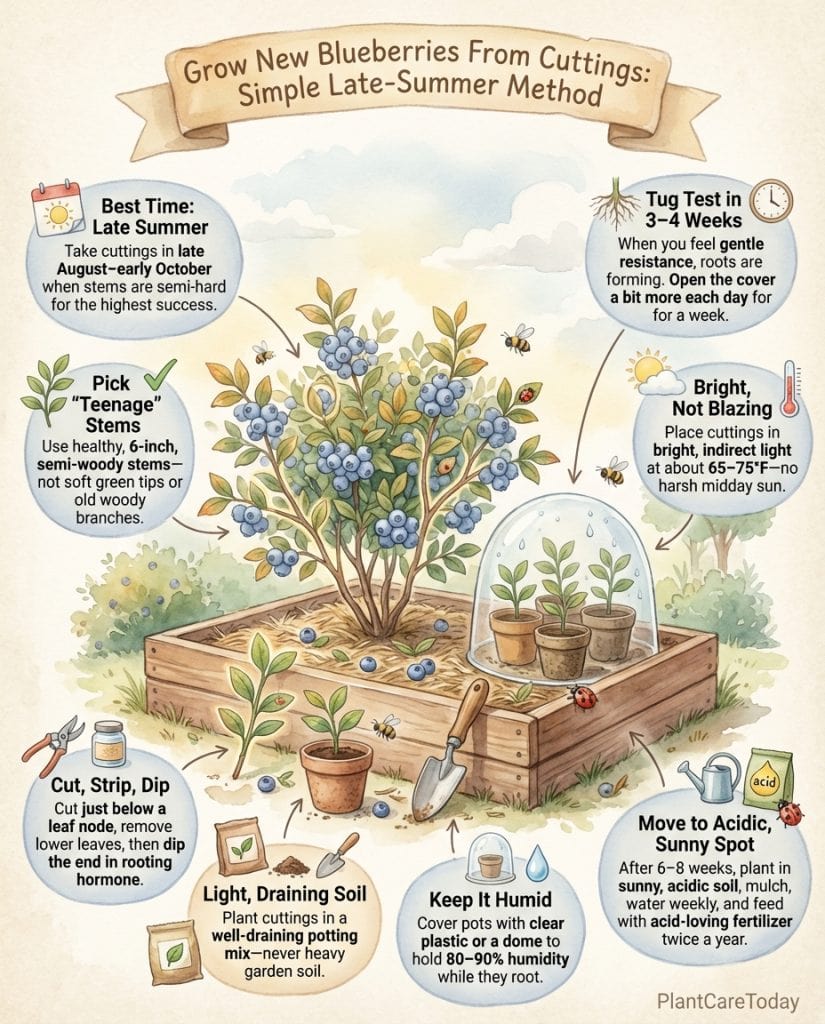
Forget what you’ve heard about spring being the best time for everything plant-related. When it comes to blueberry cuttings, the harvest period is from late August through early October.
During this period, your blueberry plants enter what I like to call their “preparation mode,” like how athletes taper before a big race. The wood becomes semi-hard, which is the sweet spot for successful rooting.

The cooler temperatures work like a natural insurance policy against the two biggest enemies of cuttings: dehydration and fungal infections. It’s like Mother Nature created the perfect propagation conditions just when you need them most.
The Game-Changer Most People Miss
Here’s what separates successful propagators from those who struggle: understanding that your blueberry plant is essentially redirecting its energy during late summer. Instead of pushing out new leaves and growth, it’s focusing on root development.
Think of it like this: If your plant were a smartphone, spring propagation would be like trying to charge it while running multiple apps. Late summer propagation? That’s like putting it in airplane mode and watching the battery percentage climb rapidly.
The numbers don’t lie: cuttings taken in late summer have a 70-80% success rate compared to just 40-50% for spring cuttings.
Your Essential Propagation Arsenal
Before you dive in, let’s talk about your toolkit. You don’t need expensive equipment – just the right basics:

- Sharp, clean pruning shears (dirty tools are like using a rusty knife for surgery)
- Rooting hormone – this is your secret weapon for faster root development
- Well-draining potting mix – never use garden soil for this
- Small pots or trays with drainage holes
- Clear plastic covers or humidity domes
- Spray bottle for misting
Pro tip: I always keep my pruning shears in a diluted bleach solution between cuts. It’s like washing your hands between patients. Simple but crucial.
The Step-by-Step Breakthrough Method
Here’s where the transformation happens. Start by selecting healthy, disease-free stems that are about 6 inches long – think of them as the “teenagers” of your blueberry plant, not too young and soft, not too old and woody.
Make your cut just below a leaf node (that little bump where leaves emerge). This is where the root magic will happen.
Strip the leaves from the bottom half. You’re essentially telling the cutting, “Focus on roots, not leaves, right now.”
The rooting hormone step is non-negotiable. Dip the cut end thoroughly, but not excessively, in milk. This powder or gel contains auxins, the same hormones that naturally trigger root growth.
Creating Your Mini Greenhouse Environment
Plant your prepared cuttings in well-draining potting mix, making holes with a pencil first. Don’t just jam them in. You’ll damage the hormone coating.

Here’s the crucial part: humidity is everything. Cover your pots with clear plastic or use a humidity dome. You’re creating a mini rainforest environment with humidity around 80-90%.
Place them in bright, indirect light. Consider the difference between sitting under an umbrella at the beach versus lying directly in the sun. Temperature-wise, you want that sweet spot of 65-75°F.
The Waiting Game That Pays Off
After about 3-4 weeks, here’s the moment of truth: gently tug on your cuttings. Feel resistance? Congratulations, you’ve got roots! It’s like that satisfying moment when you feel a fish on your line.
Don’t rush the transplanting process. Gradually reduce humidity over a week by removing the plastic cover for longer periods each day. You’re essentially weaning your baby plants off their protective environment.
From Cutting to Thriving Bush
Once your cuttings have developed a robust root system (usually 6-8 weeks), they’re ready for their permanent home. Choose a sunny spot with acidic soil – blueberries are like the divas of the fruit world; they have specific requirements.

Water deeply once a week, mulch around the base, and fertilize with acid-loving plant fertilizer twice a year. In 2-3 years, you’ll have fully producing bushes that could easily be worth $200+ if you bought them as mature plants.
The most rewarding part? Knowing that every delicious blueberry you harvest came from a simple cutting you started yourself. It’s like compound interest, but tastier.