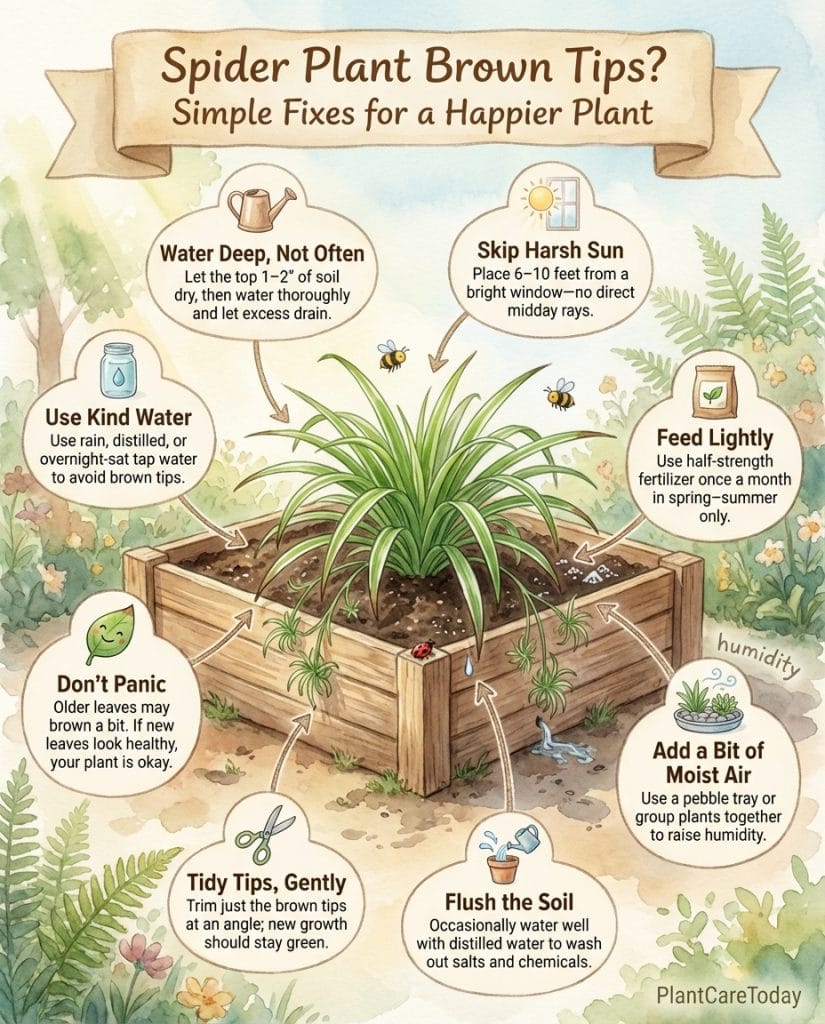
Your spider plant’s brown tips aren’t just ugly. They’re desperate distress signals! That vibrant, air-purifying friend hanging in your window is literally begging for different care.
I was shocked to discover that over 80% of indoor plant deaths start with seemingly “minor” symptoms like browning tips. Let’s rescue your suffering plant with some serious game-changing solutions!
Your Spider Plant is Screaming “I’m Thirsty!” (But Not How You Think)
Forget what you’ve heard about spider plants being indestructible. They’re actually sensitive souls regarding water, just not in the way most plant parents assume.

Brown tips most commonly appear when your spider plant is experiencing one of these water-related stresses:
- Inconsistent watering – Spider plants prefer a “drought then drench” approach rather than frequent shallow waterings
- Tap water toxicity – These plants are dramatically sensitive to fluoride and chlorine in municipal water
- Humidity desperation – Your plant might have enough water in its soil, but too little moisture in the air
The secret most plant experts won’t tell you is that spider plants actually store water in their tuberous roots, like tiny natural water bottles! When you water inconsistently, they are confused about whether to store or use their reserves.
The Hidden Villain: Your Water Quality
Is your tap water slowly killing your spider plant? Probably! Spider plants are as picky about their water as a coffee connoisseur is about their morning brew.

The fluoride and chlorine in municipal water systems are particularly toxic to spider plants, causing those crispy brown tips that make your plant look like it got too close to a campfire.
These chemicals accumulate in the leaf tips over time; it’s like your plant is suffering from a slow chemical burn!
Try these rescue strategies:
- Let tap water sit out overnight before watering (allows chlorine to evaporate)
- Use rainwater or distilled water instead (your plant will practically dance with joy)
- Filter your water before giving it to your plants (the same filter that protects you will protect them)

The Sunlight Sweet Spot (It’s Not What You Think)
Your spider plant’s relationship with sunlight is complicated. Too little, and it grows weak. Too much, and those leaf tips burn faster than a vampire at high noon.
The game-changer for your spider plant isn’t what you think. They do not want direct sunlight at all. The ideal location is about 6-10 feet from a bright window that provides bright, indirect light.
Signs your plant is getting scorched:
- Brown tips appear primarily on the side facing the window
- The browning happens rapidly (within days)
- The leaves look bleached or faded before browning

The Fertilizer Paradox: When Feeding Becomes Fatal
Most people make this mistake with their spider plant: over-fertilizing out of love. It’s like constantly feeding a child candy; your intentions are sweet, but the outcome is disastrous.
Spider plants need remarkably little fertilizer. Too much and those salts build up, creating a toxic environment that burns the leaf tips. If you see brown tips despite proper watering and light, your fertilizer routine is the likely culprit.
The perfect feeding schedule? A diluted, balanced fertilizer (½ strength) just once a month during spring and summer. That’s it! In fall and winter, your plant needs a complete feeding vacation.
The Humidity Hack That Transforms Struggling Plants
Your home is probably a desert compared to your spider plant’s natural habitat. Most homes hover around 30-40% humidity, while spider plants thrive at 60 %+.

Quick humidity fixes that actually work:
- Pebble tray miracle: Place your plant on a tray of water-covered pebbles (keeping the pot above water level)
- Strategic bathroom placement: Let your plant vacation in the bathroom during showers
- Plant clustering: Group plants together to create a mini humidity microclimate
When to Accept Some Browning (Yes, Really!)
Here’s a revelation that brought me peace: some minor tips browning on spider plants is normal, especially on older leaves. Even in perfect conditions, older leaves may develop small brown tips as they age.

The difference between amateur and pro plant parents is simply knowing when to worry and when to accept imperfection. If only the tips of older leaves are brown, while new growth looks vibrant and healthy, your plant is likely doing just fine!
If brown tips really bother you aesthetically, you can carefully trim just the brown portions with clean scissors. Cut at an angle to maintain the leaf’s natural shape. Your plant won’t mind this minor cosmetic surgery!
The 3-Step Spider Plant Revival Plan
Ready to transform your struggling plant into a spectacular specimen? Follow this simple rescue routine:
- Flush the soil thoroughly with distilled water to remove built-up salts and chemicals
- Relocate your plant to a spot with bright, indirect light away from heating/cooling vents
- Establish a consistent watering routine – wait until the top 1-2 inches of soil are dry, then water thoroughly
With consistent care, you’ll see new, healthy growth within 3-4 weeks. Remember, the brown tips won’t turn green again, but all new growth should be almost perfect!
