Ever bitten into a homegrown strawberry only to find it’s the size of a marble? After years of small harvests that looked nothing like those grocery store beauties, I was determined to figure out what I was doing wrong.
Turns out, those big, juicy strawberries aren’t just for professional farmers. The real difference for your strawberry patch isn’t expensive equipment or fancy chemicals.
It’s these 7 simple strategies that transformed my disappointing berries into plump, juicy ones that friends now ask me about.
Choose Berry Varieties That Were Born to Be Big
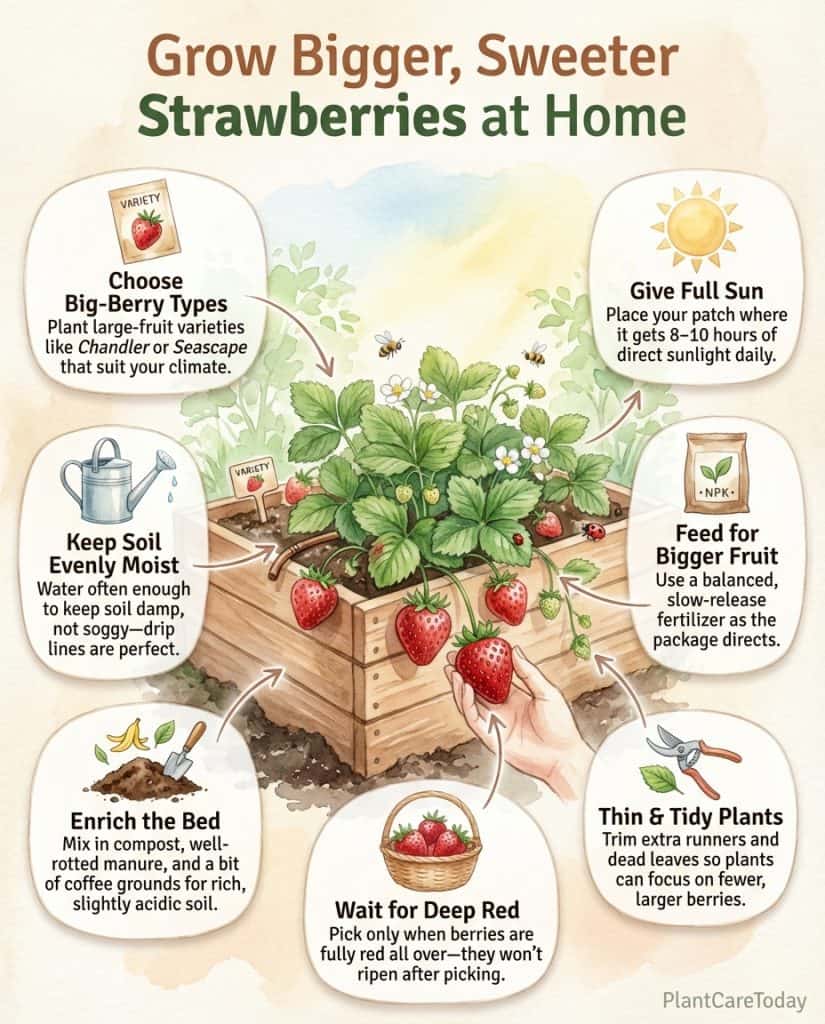
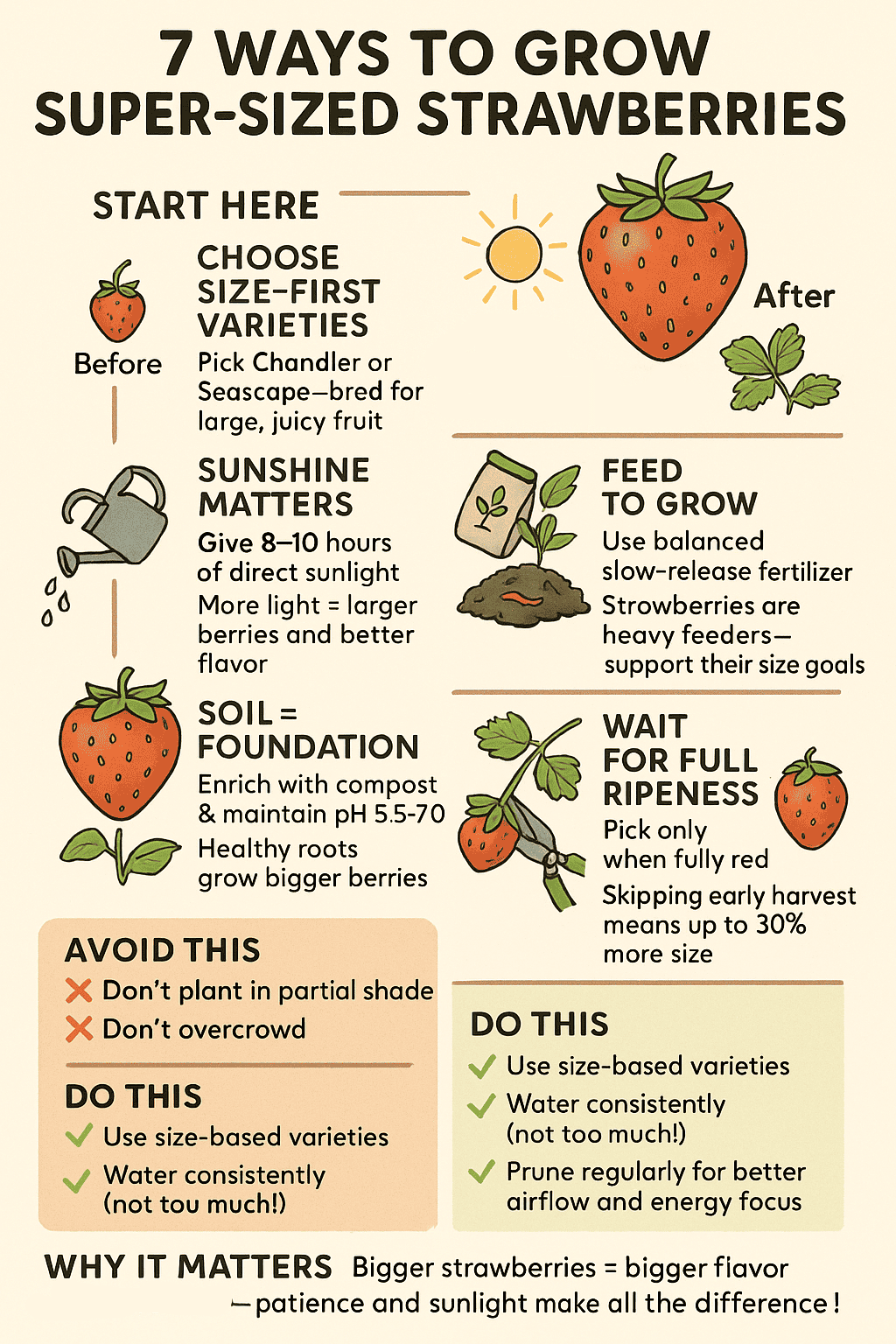
Most people make this mistake with their strawberries: planting whatever variety they happen to find first. Your strawberry success starts before you even dig a hole. Chandler and Seascape varieties are bred specifically to produce larger fruits.
Think of it like this. Trying to grow giant strawberries with the wrong variety is like trying to raise a Chihuahua to be the size of a Great Dane. The right genetics sets your ceiling for success.
• Chandler: Produces strawberries that can reach the size of a small plum
• Seascape: Offers both size and good sweetness
Quick tip: Always check that your chosen variety matches your local climate conditions. Even the best berry won’t do well in the wrong environment.

Sunbathe Your Berries to a Bigger Size
Your strawberries need one thing most gardeners don’t give them enough of: sunshine . These aren’t shade-loving plants. They need the sun to grow in size and sweetness.
I was surprised to learn that moving my strawberry patch from a “mostly sunny” spot to a full-sun spot resulted in berries that were nearly 40% larger. Strawberries need 8-10 hours of direct sunlight daily to reach their full potential.
Think of your strawberry plants as solar panels . The more energy they collect, the better your harvest will be. Those extra hours of sunshine make a real difference in how your plants perform.
The Watering Schedule That Prevents Small Berries
Strawberries need a specific watering schedule during fruiting. Those developing berries need consistent moisture to expand to their maximum size.
But don’t overwater. Too much water can lead to rot and fungal diseases that harm your crop. Aim for consistent moisture rather than soggy soil.
• Set up a drip irrigation system if possible. Wet leaves invite disease
• Water more frequently (but not more heavily) during fruiting season
• Check soil moisture by inserting your finger 1-2 inches deep if it’s dry, water
Feed Your Way to Bigger Fruit
Your strawberry plants are heavy feeders that need nutrients to produce larger berries . Think of fertilizer as what helps your plants build the fruit you’re looking for.
A balanced, slow-release fertilizer applied according to package directions can improve your harvest.
Strawberries that receive proper nutrition can contain up to 30% more natural sugars. That’s the difference between a berry that tastes bland and one that actually tastes sweet.
Soil: The Underground Secret to Bigger Berries
Your strawberry roots are living in whatever soil you’ve provided, and they’re either doing well or struggling based on that choice. These plants do best in slightly acidic soil with a pH between 5.5 and 7.0.
The difference between new and experienced gardeners often lies in their attention to soil quality. Enrich your strawberry beds with:
• Compost (great food for strawberries)
• Well-rotted manure (an excellent nutrient source)
• Coffee grounds (they like the acidity)
Your berries will reward your soil work with better size and flavor.
Prune as Your Harvest Depends On It (Because It Does)
Your strawberry patch is likely suffering from a common problem: overcrowding. Plants that don’t have breathing room can’t produce good fruit.
I noticed my strawberry harvest improved significantly after I started pruning regularly. Your plants need space to breathe and focus their energy on fewer, bigger berries rather than many tiny ones.

Think of pruning like editing a book. Removing the unnecessary allows what remains to truly shine. Cut away dead leaves, runners (unless you’re propagating), and damaged berries to redirect the plant’s energy to developing better fruits.
The Patience Principle: Harvest Timing That Changes Everything
The final key to growing bigger strawberries is surprisingly simple: patience. Unlike some fruits, strawberries will never continue ripening after picking.
Harvesting even a day too early can cost you up to 30% of potential size and sweetness. Wait until the berries are fully red, with no white shoulders, before gently plucking them from the plant.
Your patience will be rewarded with berries that are:
• Larger (they plump up in their final days)
• Sweeter (sugar content peaks at full ripeness)
• More flavorful (aromatic compounds fully develop)
After using these seven strategies, my strawberry harvest went from disappointing to really good. The truth is, I just finally gave these plants what they needed all along.
What strawberry variety will you try first? Bigger, juicier berries are possible in your garden when you follow these techniques.