Is your “impossible-to-kill” pothos suddenly looking like it’s barely hanging on? Those mysterious brown spots are your plant’s desperate SOS signal!
Forget what you’ve heard about pothos being virtually indestructible; even these jungle survivors have their breaking point.
But don’t panic! I was shocked to discover that over 80% of pothos problems can be solved with simple adjustments that most plant parents overlook.

Your Pothos Is Trying To Tell You Something (Listen Up!)
Those brown spots aren’t just unsightly blemishes. They’re your plant’s way of communicating distress.
Like a toddler who can’t use words, your pothos is throwing a visible tantrum to get your attention. And just like parenting, knowing what each cry means is the difference between flourishing and failing.
Brown spots typically signal one of six common problems. The good news? Nearly all are fully fixable without specialized equipment or a plant science degree.
Sun Damage: When Your Jungle Plant Gets a Sunburn
Despite being jungle natives, pothos plants can get sunburned just like your delicate Irish friend at the beach.

Direct sunlight is like throwing your shade-loving pothos into a tanning bed. They’ll crisp up fast!
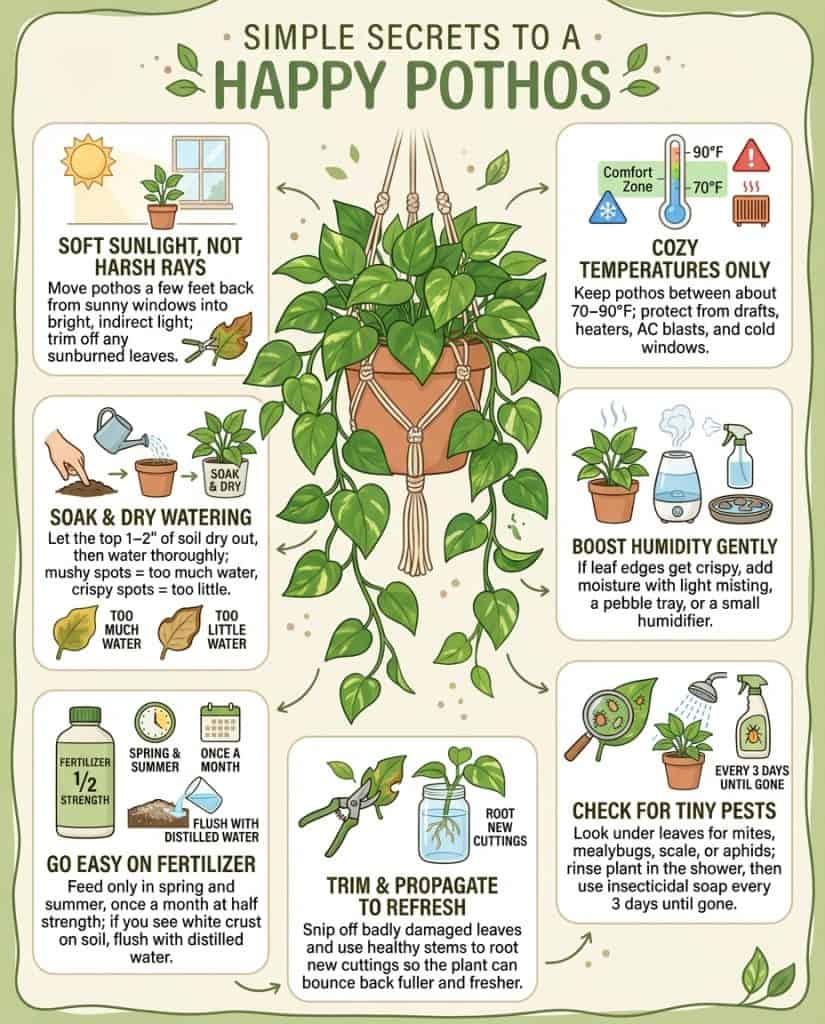
If you see brown patches or streaks on leaves facing a window, you’ve diagnosed sun damage. The game-changer for your pothos isn’t a fancy grow light. It’s simply moving it a few feet away from that window!
- The fix: Relocate to bright, indirect light; think bright enough to read by without turning on a lamp
- Pro tip: Variegated varieties need more light than solid green ones, but still no direct sun
- Healing help: Trim off burned leaves with sterile scissors. They won’t recover, but your plant will thank you with fresh growth
Temperature Trauma: Your Tropical Plant in a Cold Sweat
Pothos plants are the tropical tourists of the plant world—they’ll complain bitterly when temperatures drop below 65°F or soar above 90°F.

That sneaky draft from your AC vent might feel refreshing to you, but it’s like Arctic torture for your heat-loving pothos!
The secret most plant experts won’t tell you is that even brief exposure to extreme temperatures can trigger brown spots. Your pothos requires a consistent temperature more than most other houseplants.
- The fix: Keep your pothos in the cozy 70-90°F range
- Danger zones: Away from heaters, AC units, drafty windows, and frequently opened exterior doors
- Recovery plan: Trim damaged leaves and relocate to a temperature-stable location
Watering Woes: The Drowning (or Parched) Pothos Problem
Most people make this mistake with their pothos: they either overwater it or forget it exists until it’s gasping for moisture.
Both extremes lead to those telltale brown spots. They just look slightly different.
Overwatering creates soft, mushy brown spots (think waterlogged tissue), while underwatering produces crispy, dry brown areas. Get this right, and you’ve solved about 60% of all pothos problems!
- Perfect watering: Use the soak-and-dry method. Wait until the top 1-2 inches of soil feel dry, then water thoroughly
- Root rot rescue: If stems feel mushy near the soil, you’ll need emergency surgery! Trim rotted roots, let dry, and repot in fresh soil
- Desert revival: Completely dry? Soak the entire pot in room-temperature water for 30 minutes, then drain thoroughly

The difference between amateur and pro plant parents is simply patience with watering—checking the soil before automatically grabbing that watering can.
Humidity Heroes: Fighting Dry Air Damage
Your pothos is suffering in silence if your home’s humidity is below 40%. These jungle dwellers evolved in humid environments where dry air is as rare as snow in Miami. When humidity drops, leaf edges crisp up faster than forgotten toast.
Did you know pothos can absorb moisture directly through their leaves? That’s why misting actually works for these particular plants!
- Humidity boosters: Daily misting, pebble trays with water, or a small humidifier nearby
- Warning sign: Crispy brown edges are your humidity alarm bell
- Quick fix: Group plants together to create a mini humidity zone, they’ll all benefit from
Fertilizer Fails: When Plant Food Becomes Plant Poison
Too much of a good thing can become toxic quickly. Overfertilizing pothos causes salt buildup that literally burns roots and leaves from the inside out.
It’s like forcing your plant to drink seawater, a slow, painful path to spotty leaves.
The telltale sign? White crust on the soil surface or pot edges. This means you’ve crossed the line from helpful to harmful.
- The fix: Flush soil thoroughly with distilled water to wash away excess salts
- Prevention plan: Fertilize monthly during spring/summer ONLY, using a half-strength solution
- Better option: Repot annually with fresh soil instead of fertilizing
Pest Invaders: The Tiny Vampires Sucking Your Plant Dry
If your pothos has brown spots despite perfect care, you might have unwelcome guests! Spider mites, mealybugs, scale, and aphids are the four horsemen of the plant apocalypse, tiny sap-suckers that leave destruction in their wake.

These microscopic monsters cause spotting by literally drinking your plant’s lifeblood. The stronger your plant, the better it can defend against them.
- Spot the enemy: Look for tiny webs, cotton-like clusters, or strange bumps on stems and leaves
- Battle plan: Shower plants forcefully to blast off bugs, then apply insecticidal soap every 3 days
- Nuclear option: For serious infestations, take healthy cuttings, clean thoroughly, and restart with fresh plants
The breakthrough treatment that transformed my own pest battle? Weekly preventive sprays with diluted neem oil (a few drops per quart of water). It works like plant immunity armor!
Your Pothos Revival Plan: From Spotted to Spectacular
Ready to transform your struggling pothos into a lush, vibrant showpiece? Here’s your simple action plan:
- Diagnose: Figure out which issue matches your plant’s symptoms
- Treat: Apply the specific solution from above
- Trim: Remove damaged leaves—they’ll never recover and drain energy
- Prevent: Establish a consistent care routine that avoids these common pitfalls
- Propagate: Take a few healthy cuttings to water-root as insurance

Remember, pothos plants are incredibly resilient. They want to survive! With just a few adjustments, your plant will bounce back with stunning new growth that makes you look like a plant whisperer.
Your spotted, struggling vine can flourish into the cascading beauty you envisioned when you first brought it home!