Ever seen those cascading trumpet flowers that make porches look like they belong in a tropical paradise? That’s the Mandevilla vine – nature’s way of showing off!
While these stunners can reach a whopping 20 feet tall in tropical conditions, I was shocked to discover that most gardeners are missing out on their true potential when growing them in containers.
Ready to transform your patio with these flowering superstars? Let’s dive into how you can grow these beauties in pots like a pro!
Why Your Patio Needs Mandevilla’s Dramatic Flair
Mandevilla vines aren’t just plants. They’re a statement. These South American natives produce spectacular trumpet-shaped blooms in vibrant pinks, reds, and whites that keep coming from spring through fall.

That’s right. Unlike many flowering plants that give you a measly two-week show, Mandevillas deliver months of non-stop color!
The secret most plant experts won’t tell you is whether container-grown Mandevillas have any advantages over ground-planted ones.
You can control their environment with surgical precision when potted, minimizing pest issues and temperature fluctuations that might stress your plant.
Think of Mandevilla as the convertible sports car of the plant world; stunning to look at, surprisingly easy to maintain, and versatile enough to move wherever the conditions are best!
The 5 Non-Negotiable Requirements for Potted Mandevilla Success
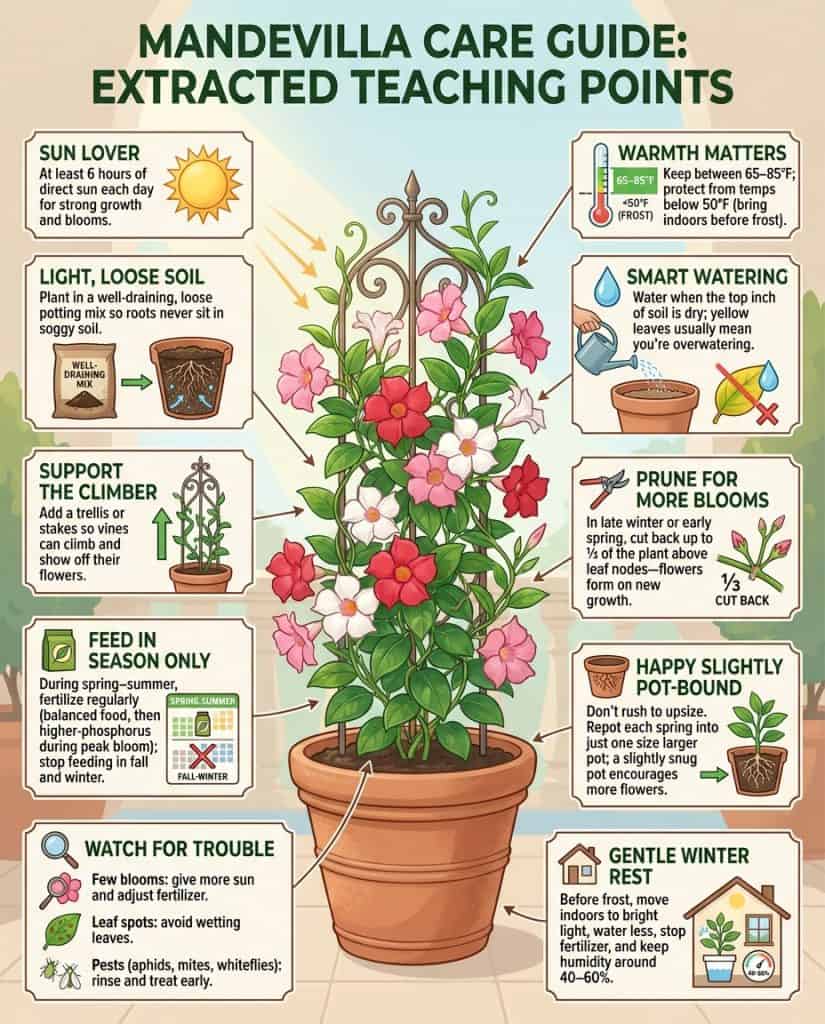
- Light: These sun-worshippers need at least 6 hours of direct sunlight daily. Skimp on this, and you’ll get leggy plants with wimpy blooms.
- Temperature: Mandevillas are tropical divas that shiver below 50°F. Keep them in the 65-85°F sweet spot for optimal growth.
- Soil: Loose, loamy soil with excellent drainage is crucial. Think African violet mix with added perlite. Your Mandevilla’s roots should never sit in soggy conditions.
- Water: Allow the top inch of soil to dry between waterings. These plants are somewhat drought-tolerant but not “forget-about-me-for-weeks” hardy.
- Support: These are climbers by nature! Provide a trellis, stake, or decorative support for them to showcase their vertical drama.

The Game-Changer: Why Pruning Makes or Breaks Your Mandevilla
Forget what you’ve heard about leaving flowering vines alone! With Mandevilla, pruning isn’t just recommended.
It’s essential for those jaw-dropping blooms. Here’s why: Mandevillas only flower on new growth. That’s right! No new growth = no gorgeous flowers.
Late winter to early spring is your pruning sweet spot. Remove up to (but never more than) ⅓ of the plant’s mass, cutting just above a leaf node. Think of it as giving your plant a strategic haircut to stimulate its flowering.
Your Mandevilla is trying to tell you something important when it gets leggy or sparse. It’s literally begging for a trim! Listen to it, and you’ll be rewarded with a dramatically more vibrant display.
The Fertilizer Secret That Unlocks Explosive Blooms
Most people make this mistake with their Mandevilla. They either overfeed it or use the wrong fertilizer entirely.
During the growing season, these flowering machines need regular nutrition every two weeks, but here’s the twist:
Alternate between a balanced fertilizer and a higher-phosphorus formula during peak flowering for the most vibrant, abundant blooms.
You can also sprinkle a small amount of bone meal around the base of the plant for a natural phosphorus boost that fuels flower production.
Just remember: STOP all feeding in fall and winter. Your plant needs its beauty rest during dormancy, and fertilizing during this period can stress it out!

Pot-Bound Paradise: The Container Strategy Most Gardeners Miss
Here’s a surprising fact: Mandevillas actually bloom more profusely when slightly pot-bound! While most potted plants beg for more space, your Mandevilla performs best when its roots have just enough, but not too much, room to grow.
That said, these fast growers will still need repotting every spring. Move up just one pot size if you see roots emerging from drainage holes. This annual refresh also allows you to replace depleted soil and inspect the root system for any issues.
When potted properly, Mandevillas typically reach about 5 feet tall, a quarter of their potential jungle height, perfect for patios and porches where their stunning blooms can be appreciated up close.
Rescuing a Struggling Mandevilla: The SOS Guide
Is your once-vibrant vine looking less than spectacular? Here’s how to diagnose and revive:

- Few or no blooms: Usually indicates insufficient light or phosphorus. Move to a sunnier spot and adjust your fertilizer strategy.
- Yellow leaves: Often a sign of overwatering. Allow the soil to dry out more between waterings, and check for proper drainage.
- Leaf spots or discoloration: Could be due to fungal issues caused by wet leaves. Water the soil level and improve air circulation.
- Pests: Watch for aphids, spider mites, or whiteflies. A gentle insecticidal soap application can be effective before infestations become serious.
The difference between amateur and professional plant parents is simply the frequency of observation. Check your Mandevilla weekly for early signs of stress; you’ll catch problems before they escalate!
Winter Survival Guide: Don’t Lose Your Mandevilla!
Unless you live in zones 9-11, your Mandevilla needs to come indoors for winter. But don’t just drag it inside and hope for the best! Follow these steps:
- Before the first frost, bring the plant indoors to a bright location
- Reduce watering significantly, allowing the soil to dry more between waterings
- Stop fertilizing completely until spring
- Maintain temperatures above 50°F at all times
- Watch humidity levels (40-60% is ideal)
Your Mandevilla may drop some leaves or look a bit sad during winter; that’s normal! It’s simply conserving energy for next season’s spectacular show.

The Bottom Line: Container Mandevilla Success
Growing Mandevilla in pots isn’t just possible. It might be the best way to enjoy these flowering powerhouses!
With the right conditions and a little regular attention, your potted Mandevilla will transform from an ordinary plant into a showstopping focal point that blooms for months on end.
Remember: sun, well-draining soil, consistent moisture (but never soggy), regular feeding during the growing season, and annual pruning are your keys to success. Master these fundamentals, and you’ll have the most dramatic container plant on the block!